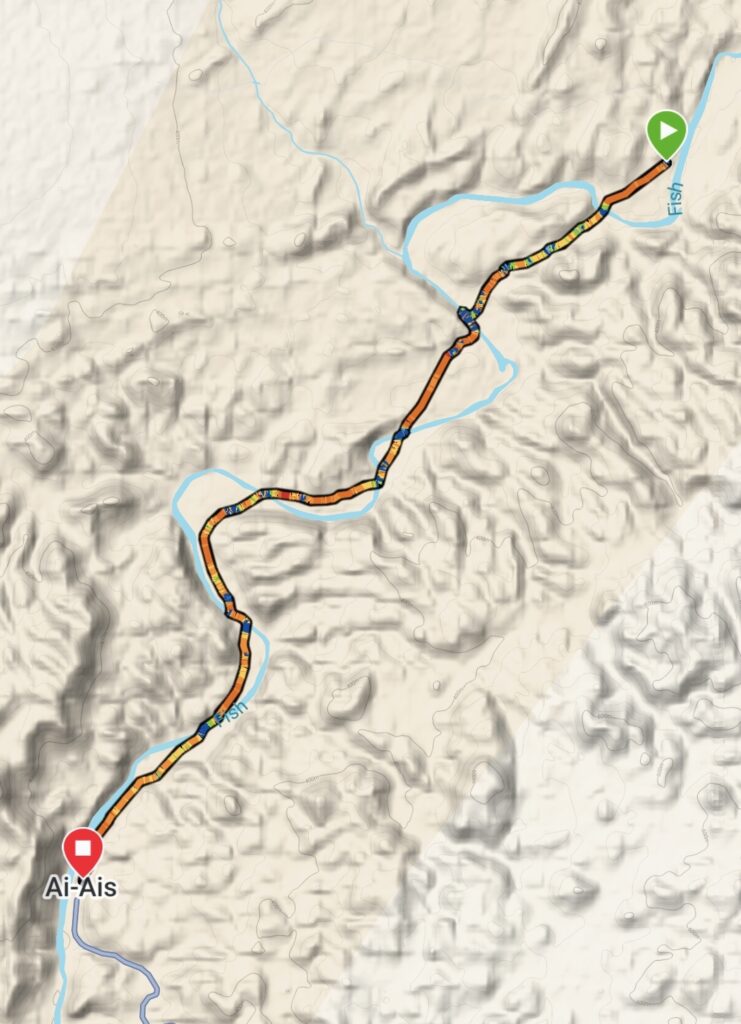
What can you say about the Fish River Canyon hike, that hasn’t been said before. There is so much information available on the web. We can only reflect on our journey – the preparation, the travel to Ai-Ais, and then of course, the hike itself.
This was my 7th hike. Each one was unique in it’s own way – different times of the season, water levels varied. And then, different people, and also, the regulars. At the end it is the team that makes the hike memorable. And when you walk the canyon again, you remember the people, the moments, the places. You tend to forget the struggles a bit. Every time, the canyon is different. It’s new, but also familiar. It becomes part of you. Maybe that’s why I’ll go back again.
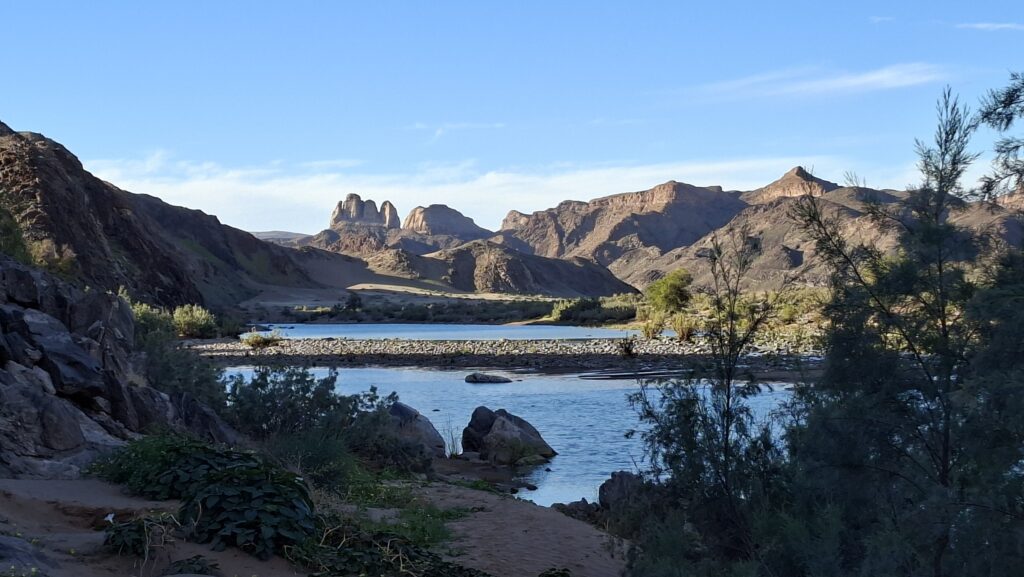
Cape to Ai-Ais – the preparation, training and planning.
A bit of admin:
Permits, shuttle and camping at Ai-Ais: ct.bookings@nwr.com.na
I booked the hiking permits well in advance – somewhere in 2025. The camping and shuttle were arranged in the last 2 weeks before we started.
The hiking season usually starts beginning of May. This year, because the high water levels, NWR only opened the canyon 2 weeks later. We followed the comments on the Facebook group (I hiked the Fish River Canyon). We were lucky that the water levels dropped to an acceptable and safe level. If there were any concerns, we would have postponed our hike to a later date.
Eric McLaren’s book and the Slingsby map provide very valuable information.
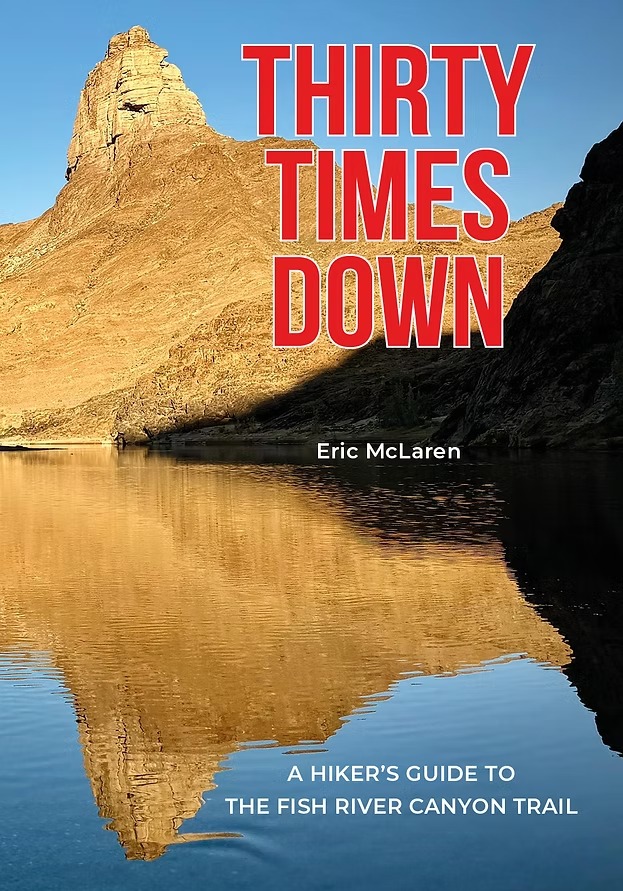

The book can be ordered from Eric McLaren
I bought the map at Outdoor Warehouse
We did a few day hikes as preparation. Unfortunately we didn’t have enough time for overnight hikes. Some of our group were fitter than the rest. But everyone showed up and did his/her best. No complaints, no excuses.
My hiking gear is more than 20 years old. Karrimor backpack, blue foam mattress, small gas stove. I bought a lightweight tent – definitely not weatherproof. I need to invest in a good lightweight tent. Boots – Keen. Others had Hi-Tec, Karrimor, Hoka, Salomon. We’ll sometime do a blog post on our gear – pro’s and con’s.
7 June 2026 – Cape Town to Noordoewer.
We left Cape Town at about 7:30am, following the N7 and reached the border just after 3pm.
The border crossing went smoothly. We had to disinfect our shoes – and luckily only the one pair of hiking boots that was lying on top of the luggage. Because of the foot-and-mouth disease in South Africa, you are not allowed to bring any animal products into Namibia. No meat (cooked, frozen, dehydrated). No dairy products – not even condensed milk or chocolates. And no fresh fruit and vegetables. The only costs at the border was the Road Accident Fund insurance (R450). They accept cards and cash.
First night camping: Orange River Lodge, Noordoewer, Namibia. Just show up, they don’t take bookings for camping.
We set up camp and then went to the Shell garage next to Orange River Lodge. We ordered food from them beforehand, as we could not bring our normal hiking food into Namibia. Biltong, droëwors, salami sticks, pasta and sauce, provitas, Melrose cheese, peanuts, etc. They have a decent little shop there, where we could get additional snacks.
Orange River Lodge has a restaurant, bar and there’s ablutions at the campsite. All we needed after the drive from Cape Town.
8 June 2026 – Noordoewer to Ai-Ais, via Aussenkehr
We drove to Aussenkehr (C13, 50km) to get the last things at Spar and Tops. We had high hopes, but maybe because it was after month-end, the shop was not well stocked. Note – baby formula is not a good replacement for powdered milk.
Just past Aussenkehr, turn right on the road towards Ai-Ais. This gravel road connects with the D316 and eventually, the C10. It is roughly 70km to Ai-Ais.
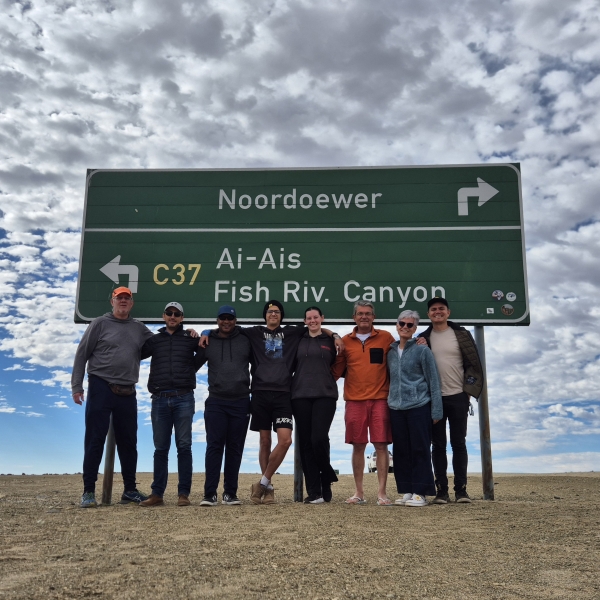
We reached Ai-Ais around noon and set up tent on the grass. Then it was time for the big sort-out. What’s needed, what not. Sorting out food per day. Weigh your backpack, take some more stuff out. You don’t want your backpack to be too heavy. Mine was about 18kg, maybe a bit more.
Ai-Ais looks about the same as 1999, when I first hiked the canyon. The shop is sort of empty, but there is electricity, cold beer and the restaurant is operating. There’s wifi, slow and intermittent, but it helps to send the last messages. The outside pool was sort of warm. The personnel is friendly and trying their best to make your stay comfortable.
Why do we still camp at Ai-Ais? Maybe sentiment. I like to be there, feel the place, chat with other hikers that have just done the hike. It’s one of my happy places. And sometimes you can borrow a mattress from another hiker, or a canister of gas.
Day 1 – 9 June 2026: Into the belly of the beast
The day started early. We had to pack up our tents at Ai-Ais, check everything and took the 7am shuttle to Hobas. It’s about 70km gavel road. At Hobas, we had to pay the park fees (R180 per person), hand in your medical form, fill in the Hikers Registration List, and also an NWR indemnity form. It is also the last change to get a coffee, use proper ablutions (for a week), and maybe get a souvenir at the shop. Then it’s back in the shuttle for the last 10km to the starting point. When the shuttle leave you there, you realize, there’s no turning back.
After the last adjustments to the backpacks and a few group photos we started the descent at about 9am. It’s a slow climb down.
It took us approximately 3 hours to reach the river. Once you’ve reached the river, the terrain varies from boulders and sand, to rock plates. The pace is slow and we crossed the river once (and back).
We should’ve crossed the river again to avoid Spring in the reeds, because it’s messy and a struggle. You first need to go through muddy reeds, and then cross a rock, underneath a thorn bush.
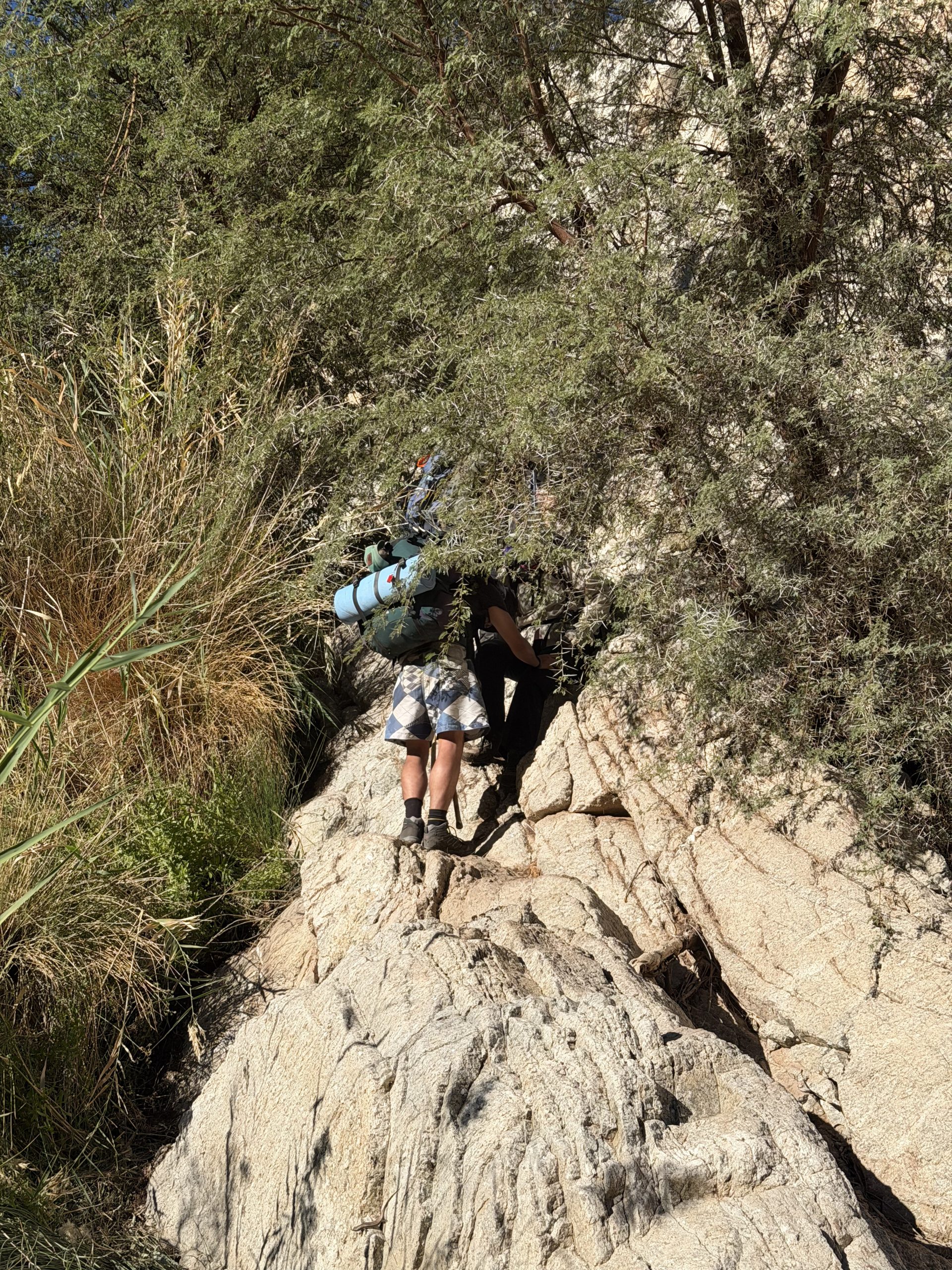
We slept on a sand bank a few hundred meters after Spring in the reeds.
There’s so much beauty in the canyon.
Distance 6.58 km, Total ascent 96 m
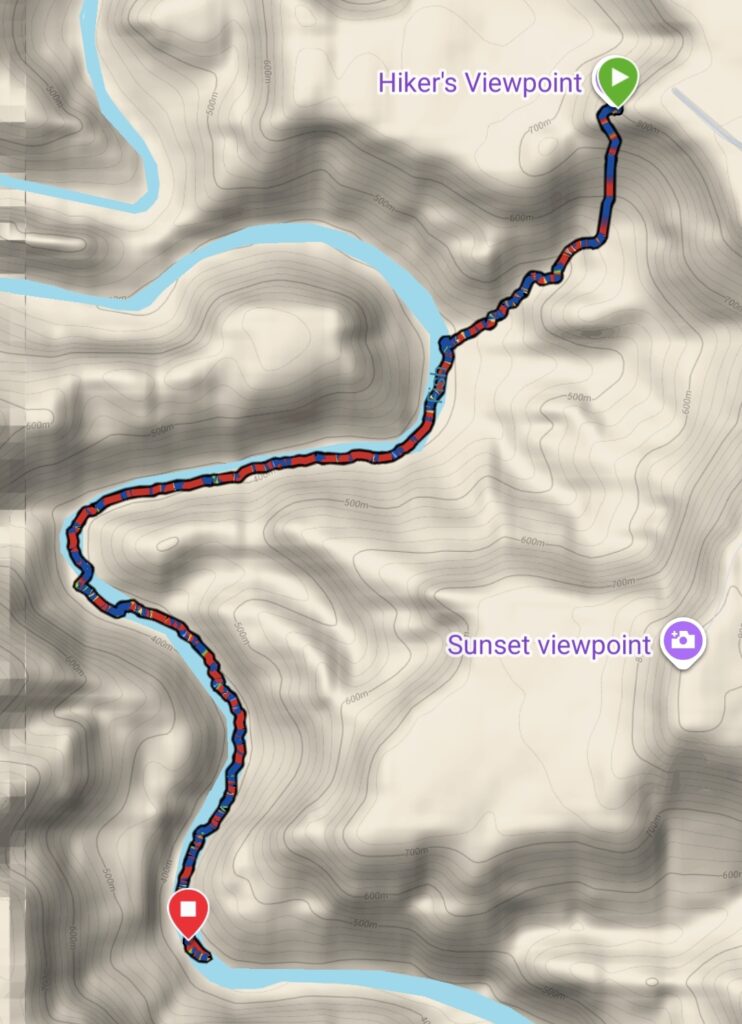
Day 2 – 10 June 2026: To Palm Springs and beyond
The day started around 8am. We did not want to walk in the dark. Everyone had a good rest, although it takes time to adjust to the thin hiking mattresses.
Our goal was to reach Palm Springs, or a overnight spot about 1km further on.
The first part of the day is still in the boulder field, so the pace was slower. We only had to take off our boots twice for river crossings at a sandy spot. Otherwise we managed to find places where there were enough boulders to cross without getting too wet.
We reached the Vespa at about 9am and did the “compulsory” photo shoot. As the day progressed, the terrain became easier to walk. Late afternoon, a helicopter circled above the canyon. We were just past the emergency exit. The helicopter landed near us on a sandy spot. The crew were looking for someone with a broken arm, that sent an emergency message. The coordinates showed somewhere near the Sulphur Spring viewpoint or the emergency exit. We tried to assist with our map and knowledge of the canyon. After a few photos, they left and we continued to Palm Springs. Only Rikus had a quick swim in the hot water, and we continued to our overnight spot for the evening.
Video: Janco
We saw the horses at Palm Springs and later the evening, they also moved through our camp.
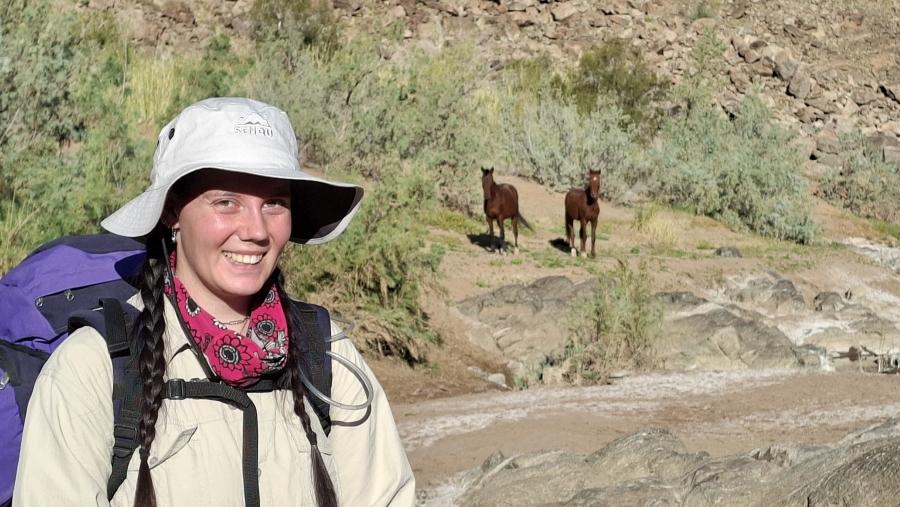
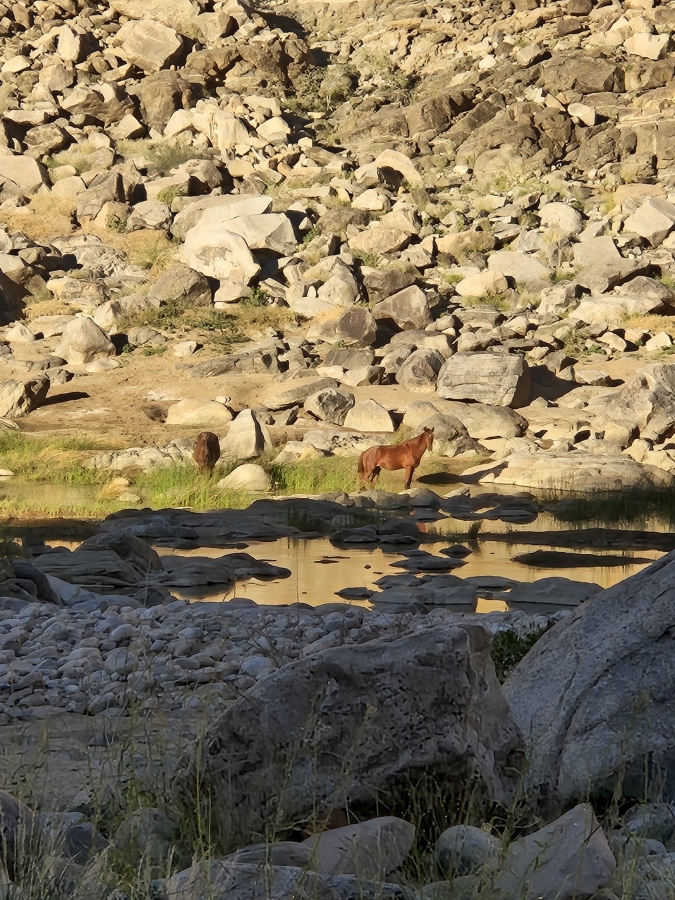
Distance 13.82 km, Total ascent 130 m
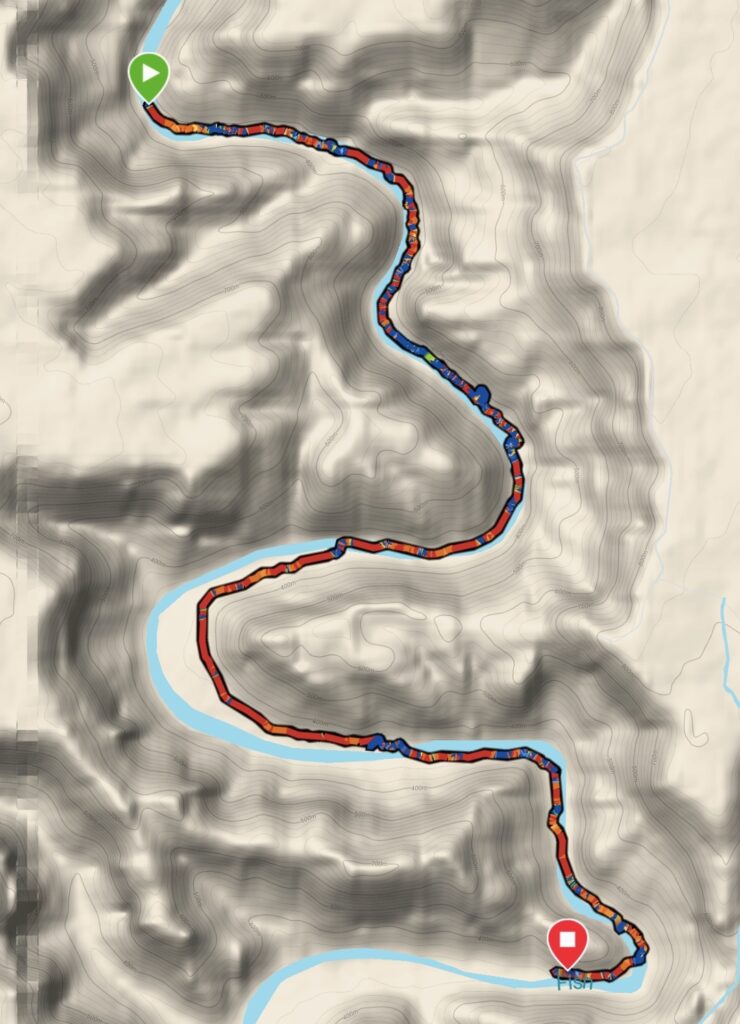
Day 3 – 11 June 2026: The longest day
Distance 20.24 km, Total ascent 167 m
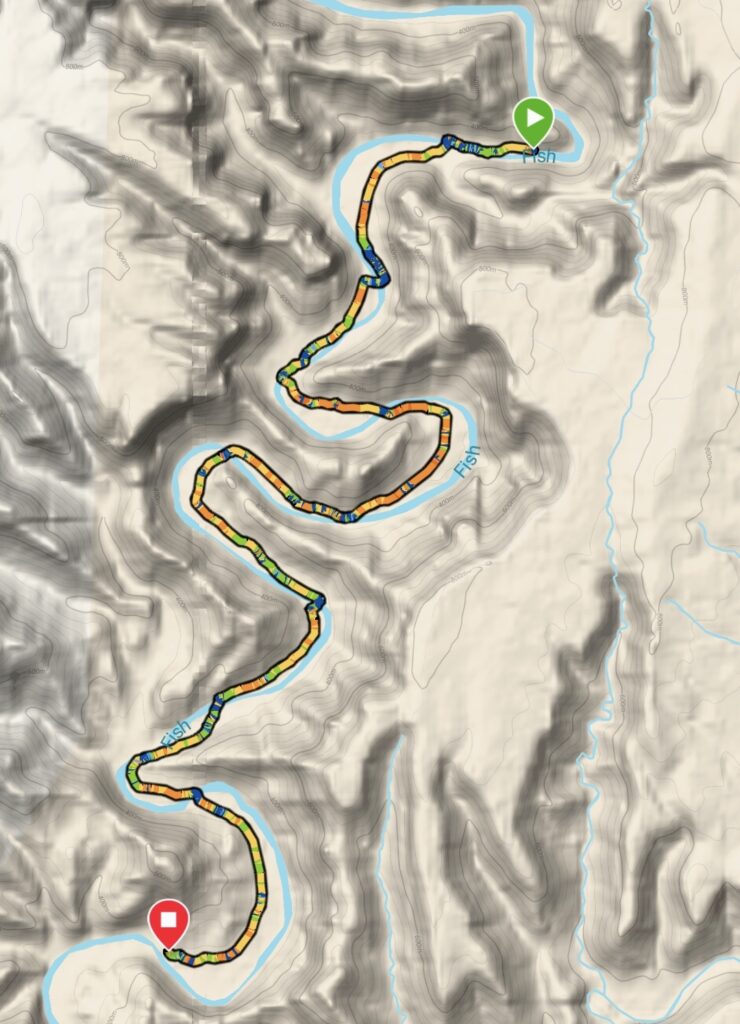
Day 4 – 12 June 2026: Shortcuts and Pink Palace
Distance 15.91 km, Total ascent 162 m
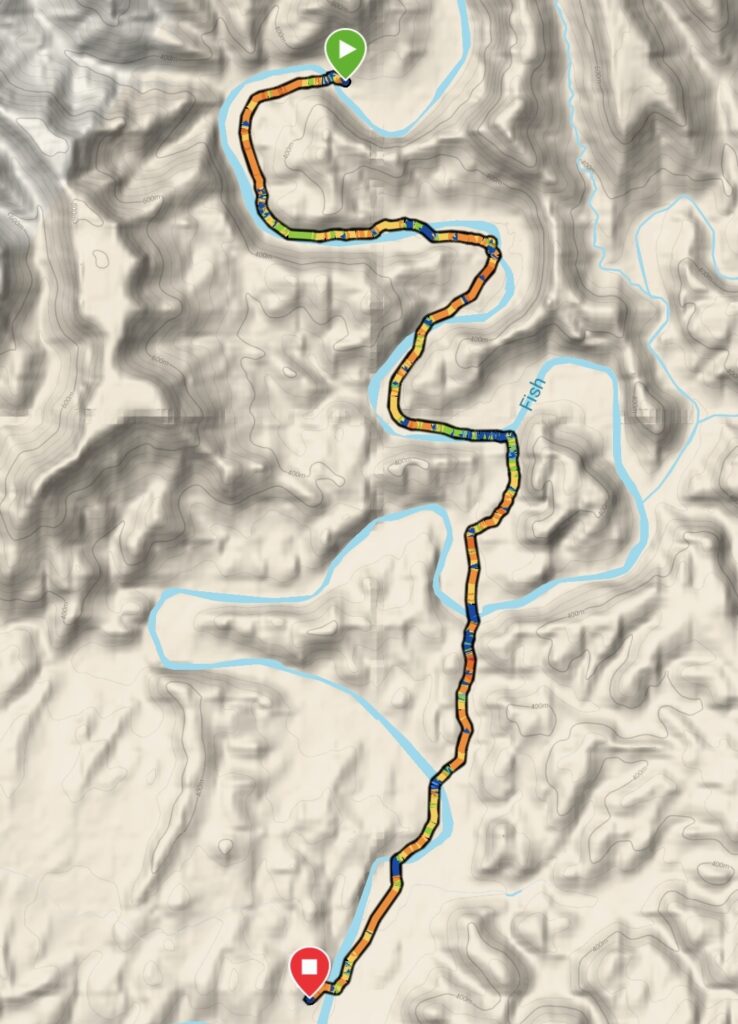
Day 4 – 13 June 2026: The last stretch to Ai-Ais
Distance 15.62km, Total ascent 164m